
Percy Shaw: The Yorkshire inventor and businessman who patented the reflective road stud or 'cat's eye' in 1934 that has since been used all over the world

Percy Shaw was an inventor and businessman from Yorkshire who patented the reflective road stud - also known as the ‘cat’s eye’ - and it has since been used all over the world.
The Halifax-born inventor and businessman set up a company to manufacture his ‘cat’s eye’ invention a year after it was patented.
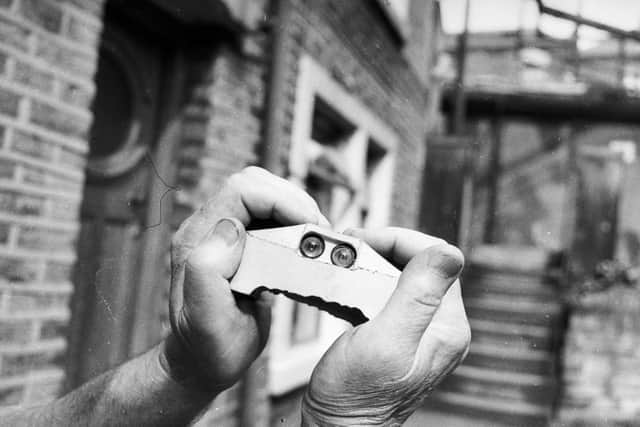
The original version involved two pairs of retroreflectors set into a white rubber dome, mounted in a cast iron housing. This type marks the centre of the road, with one pair of cat’s eyes showing in each direction.
Since its creation, it has been used all over the world including the US, China, Europe, New Zealand, Lebanon and Ireland.
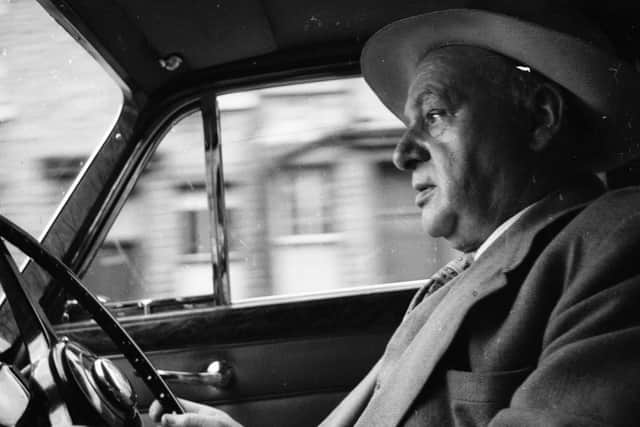

Early life of Percy Shaw
Percy Shaw was born in Halifax on April 15, 1890, and was the fourth child and second son of James Shaw, a dyehouse labourer who worked at a local mill, and his second wife Esther Hannah Morrell.
His father also had seven children by his first wife, Jane Brearley, who died in 1883 and nine years later his parents moved their large family to Boothtown in Halifax, where Percy lived for the rest of his life.
Percy attended Boothtown Board School and started working as a labourer in a cloth mill from the age of 13.
He became an apprentice to a wire drawer, but the low wages motivated him to take on a series of unskilled jobs in local engineering works.
So Percy joined his father in a new business repairing small machine tools used in munitions production during the First World War.
Following his father’s death in 1929, he set up his own small business as a road contractor, repairing roads until his death in the 1970s and received an OBE in 1965.
Percy Shaw’s invention

From a young age, Percy was an innovative person. His most famous invention was the cat’s eye for showing the way along the roads in the dark.
It is not confirmed the exact circumstance that inspired him, however, there are a couple of stories about how he came up with the idea.
The most well known story was about him driving down Queensbury Road, part of the A647 with a very steep drop to one side, from the Old Dolphin public house in Clayton Heights to his home in Halifax.
A cat on a fence along the edge of the road looked at the car and their eyes reflected his headlights back to him, which allowed him to take corrective action and remain on the road.
But in an interview with Alan Whicker he told a different story about being inspired on a foggy night to think of a way of moving the reflective studs on a road sign to the road surface.
Local schoolchildren who were taken on visits to the factory in the late 1970s were told that the idea came from Percy seeing light reflected from his car headlamps by tram tracks in the road on a foggy night.
The tram tracks were polished by the passing of trams and by following the advancing reflection, it was feasible to maintain the correct position in the road.
Sales of the reflective studs were initially low, but approval from the Ministry of Transport and the blackout in the Second World War gave a significant boost to production and the firm, located near Percy’s home in Boothtown, increased in size, making more than a million roadstuds a year, which were exported all over the world.
A later patent added a rainwater reservoir to the rubber shoe, which could be used to wash the glass ‘eyes’ when a car drove over the stud.
A single-ended form has become widely used in other colours at road margins and as lane dividers.
Cat’s eyes are especially useful in foggy conditions and are predominantly resistant to damage from snow ploughs.
A primary feature of the reflective stud is the flexible rubber dome which is sometimes misshapen by the passage of traffic. A fixed rubber wiper cleans the surface of the reflectors as they sink below the surface of the road.
In order to protect the rubber dome from impact damage, there are metal ‘kerbs’ in place which also provide tactile and audible feedback for drivers.
What impact has it had on road users?
AA president, Edmund King, said: “Cat’s Eyes have played a significant role in improving road safety in the UK since their invention in the 1930s.
“By clearly marking the road ahead at night and in poor weather, the reflective studs help drivers see lane boundaries, bends and hazards more easily.
“Their simple but effective design has made night-time driving safer and remains an important feature of our roads today.
“In fact, Percy Shaw's Cats Eye invention is a brilliant example of British ingenuity that changed road safety around the world.
“Invented in Yorkshire more than 90 years ago, the simple reflective road stud must have saved thousands of lives in Britain, and its principle has since been adopted on roads across the globe.”
Percy’s later life
He became an eccentric character later in life, removing the carpets, curtains and most of his furniture from his isolated home.
He kept all four of his TVs on constantly, supposedly so that his friends could watch whichever channel they wanted with no arguments according to an interview with Alan Whicker.
The only luxury item he bought was his Rolls-Royce Phantom. Percy never got married and died from cancer and heart disease at Boothtown Mansion, Halifax, on September 1, 1976, where he had lived for all but two of his 86 years.
His personal estate was admitted to probate in December 1976, at a value of £193,500. He was agnostic, but his funeral was held at Boothtown Methodist Church and was cremated in Elland.
In 2005, he was listed as one of the 50 greatest Yorkshire people in a book by Bernard Ingham.