
Who decides and who pays for flood resilience?

As flooding becomes more frequent and severe, communities are asking not only how they are protected, but how decisions about flood resilience are made.
For those affected, questions about responsibility, timing and action come to the fore with each event.
But flood resilience is not shaped by a single organisation. It is the result of decisions taken across multiple organisations, working with different responsibilities, priorities and evidence.
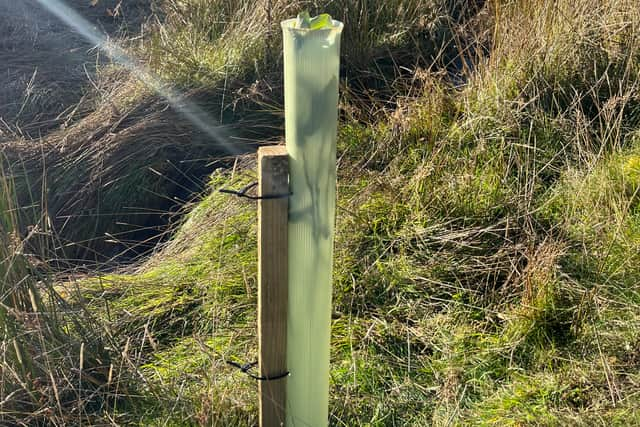
Nature-based Solutions (NbS) became an internationally recognised term at the 5th UN Environment Assembly in 2022. NbS includes natural flood management (NFM), such as wetland creation, tree planting and river restoration, which are increasingly recognised as part of long-term flood resilience.
As climate change drives more extreme weather across the UK, interest in these approaches is growing. At the same time, a wider national conversation is emerging about how they are designed, funded and delivered in practice.

While the scientific evidence continues to develop, many practitioners suggest the greater challenge now lies in governance, trust and decision-making.
Who decides where schemes go? Who pays? Who carries the risk if they fail?
These questions do not have simple answers, as responsibility is shared across partners and shaped by local context.
Government, councils, regulators, land managers and communities all play a role - requiring coordination across institutions rather than decisions being made by a single authority.
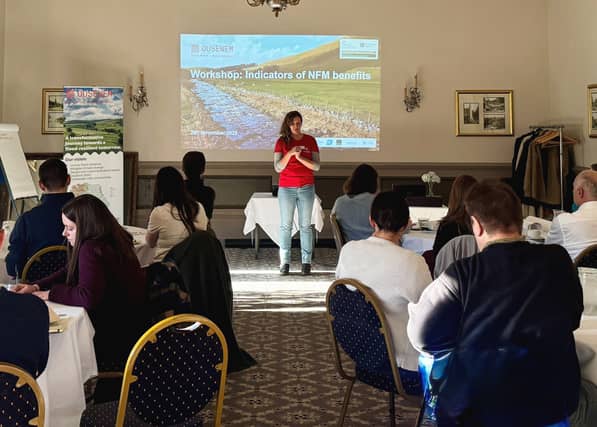
These questions sit at the heart of conversations surrounding work such as Ousewem, a flood resilience programme in York and North Yorkshire.
These issues will also be explored at a national level in York on June 29 and 30, at the British Ecological Society’s symposium, Nature-based Solutions: Who benefits, who decides and who pays?
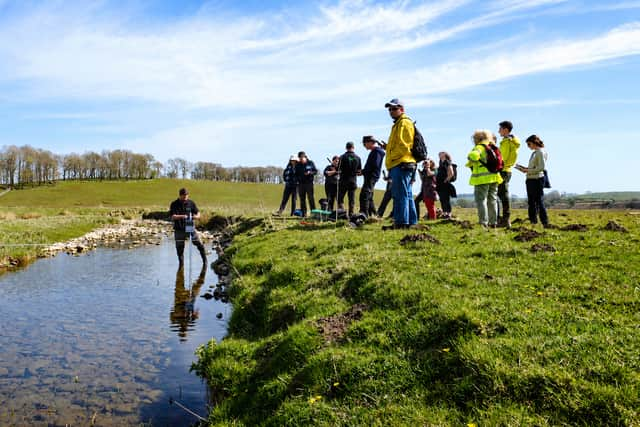
Ousewem is a publicly funded partnership programme, led by the City of York Council and supported through Defra’s £200 million innovation programme. It brings together councils, scientists, environmental organisations, land managers and communities to explore how natural flood management can contribute to reducing risk.
Governance is partnership-led, with councils, environmental bodies, scientists, land managers and communities all contributing to how projects are designed, funded and implemented. In practice, this means decisions are negotiated across partners rather than determined by a single organisation.
This remains one of the central challenges for nature-based flood resilience as approaches begin to be considered more widely.
At present, much of this work is publicly funded. As nature-based approaches develop, questions are emerging about how future funding may be shared between public sources, private investment and local stakeholders.
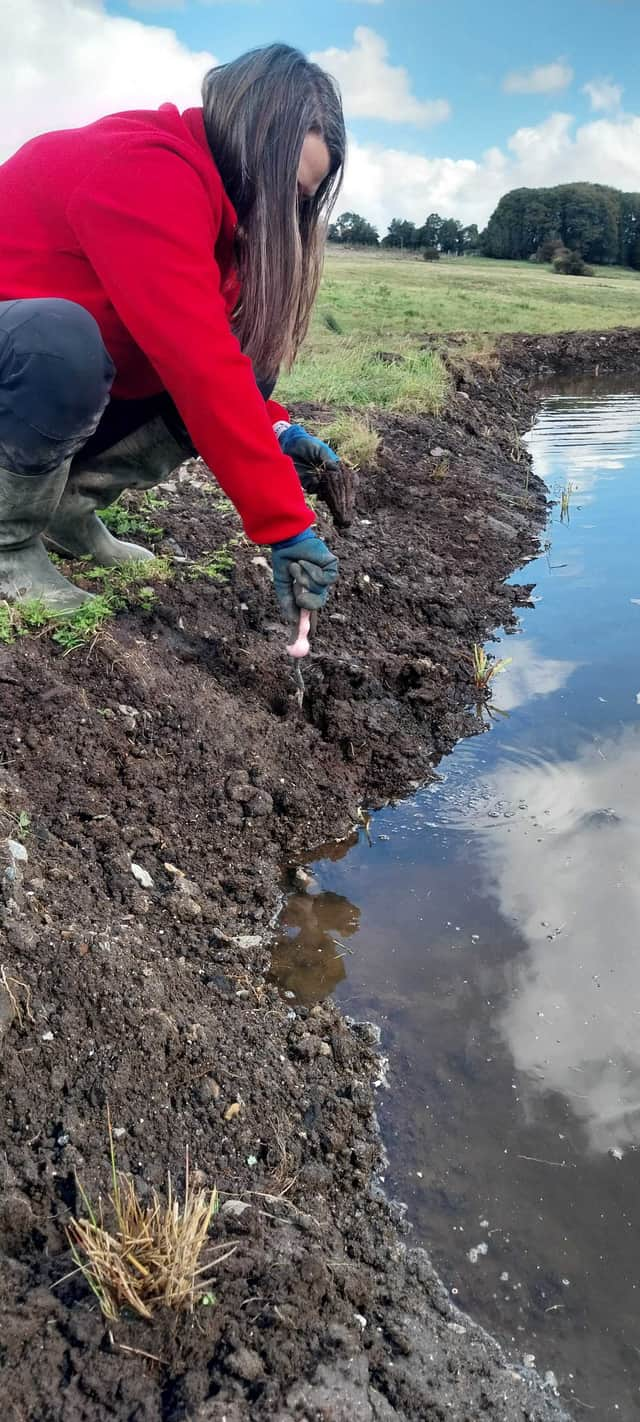
In future, schemes may draw on a mix of public funding, environmental funding, council support and private investment.
Learning from Ousewem reinforces that flood resilience is about systems rather than single solutions.
Nature-based solutions are rarely controlled by a single organisation. Councils, regulators, researchers, land managers and communities all influence decisions, making governance one of the key challenges as approaches develop.
Sally Ashby, financial strategy lead for Ousewem, says evidence alone cannot solve the difficult questions surrounding fairness, accountability and risk.
“Strong evidence is essential, but it doesn’t make decisions for us,” she explains. “Questions about risk, responsibility and equity still need to be worked through with all partners. That’s why governance and trust are just as important as the data itself.”
Catherine Cowie, Research Fellow at the University of York, highlights that biodiversity and habitat restoration are central to the long-term value of nature-based approaches.
She said: “The Ousewem project is researching how benefits are measured in order to propose enhanced data collection strategies that will generate a robust evidence base to support effective decision-making.”
The British Ecological Society, a membership organisation of over 7000 ecologists, uses ecological research to help shape Government policy on climate change and flood resilience. Its York symposium aims to unite scientists, councils, water companies, landowners and communities to help decide who should lead, fund and benefit from future nature-based flood defence schemes.
Xanthe Thompson leads the British Ecological Society’s nature-based solutions work focused on flood resilience.
She says schemes work best when national leadership is backed by strong local partnerships, warning communities and land managers must help shape decisions if projects are to deliver wider environmental and social benefits.
Public trust, clear scientific communication and long-term funding remain major challenges as nature-based flood management expands nationally, she says.
Who should really lead flood resilience decision-making?
Xanthe said: “We advocate for an approach that's both bottom up and top down. a government mandate, can drive the use of NbS, but without that local partnership you lose out on the multiple benefits that nature based solutions can offer.
“you need as many people as possible involved in the decision-making, to get those multi-benefits - you get flood resilience, biodiversity, and improved well-being for local communities,
She added: “Trust and public confidence have always been important. There's a bit of a communications challenge for scientists who feel that we have built up a good body of evidence that these natural approaches work but people don't want to take risks with their homes and their businesses when it comes to flooding and that's understandable.
“So it's up to scientists to communicate that evidence well, and in a way that people understand. It's up to the decision makers, to listen to the evidence and act on it .”
She believes nature-based flood schemes cannot succeed without land managers fully buying into them.
“There needs to be some consensus on how land is managed, so buy-in from land managers is absolutely essential. But, if you don't have community level input, you will miss out on wider benefits, from biodiversity to local tourism..
“Maybe the simplest thing would be a Government mandate, a recognition that these nature-based approaches are effective and need to be delivered at catchment scale.”
* The BES 2026 Symposium Nature-based Solutions: Who benefits, who decides and who pays? is at the National STEM Learning Centre, York, on June 29 and 30.
Registration remains open until Friday, June 12, 5pm at https://www.britishecologicalsociety.org/content/bes-symposium-2026/registration.
BLOGS:
READ MORE: